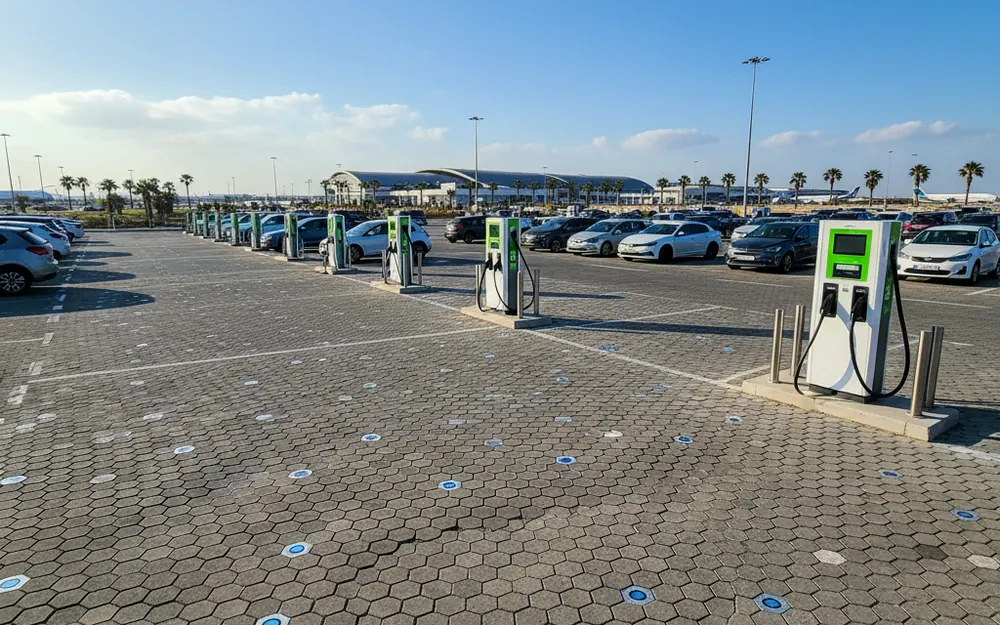
Smart parking in 2026 is a networked stack of sensors, ANPR cameras, payment APIs, and EV chargers that turn a parking asset into a data-emitting service. It earns money the asset previously left on the table.
Why 2026 is the inflection year
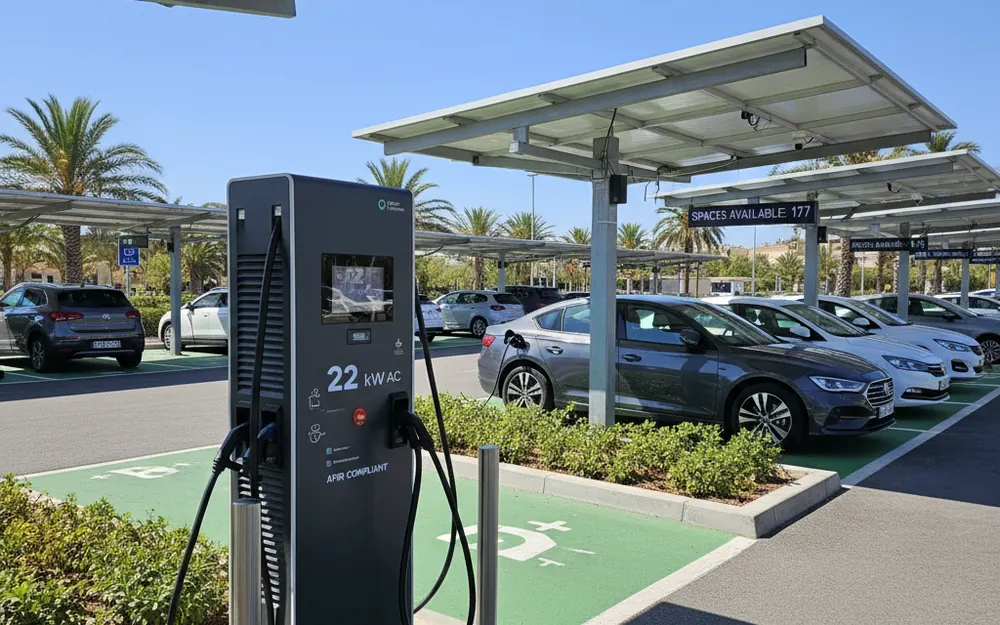
The EU Directive 2014/94/EU sets the legal floor for EV charging on public parking lots, and the AFIR regulation that built on it took effect in stages across 2024 and 2025. By the end of 2025 most non-residential lots above 20 stalls in member states like Cyprus and Greece were under a deployment obligation. NextGenerationEU has co-funded Cyprus pilots since 2024.
For the asset owner, this means the upgrade question shifted from "should we" to "by when, and at what cost." Sensors and ANPR turn a static lot into a service. EV chargers turn it into a destination.
What the stack looks like
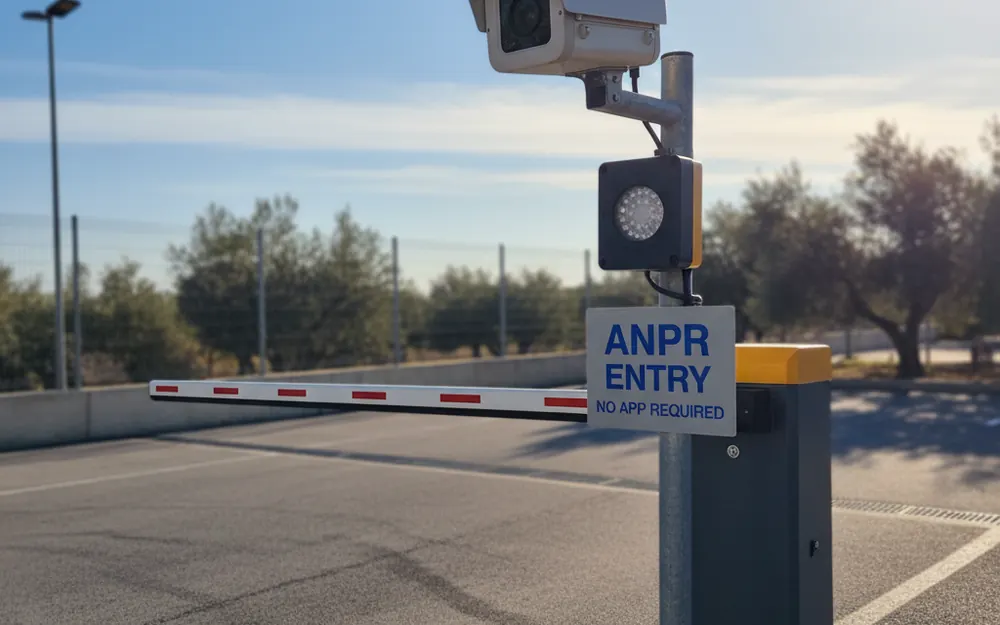
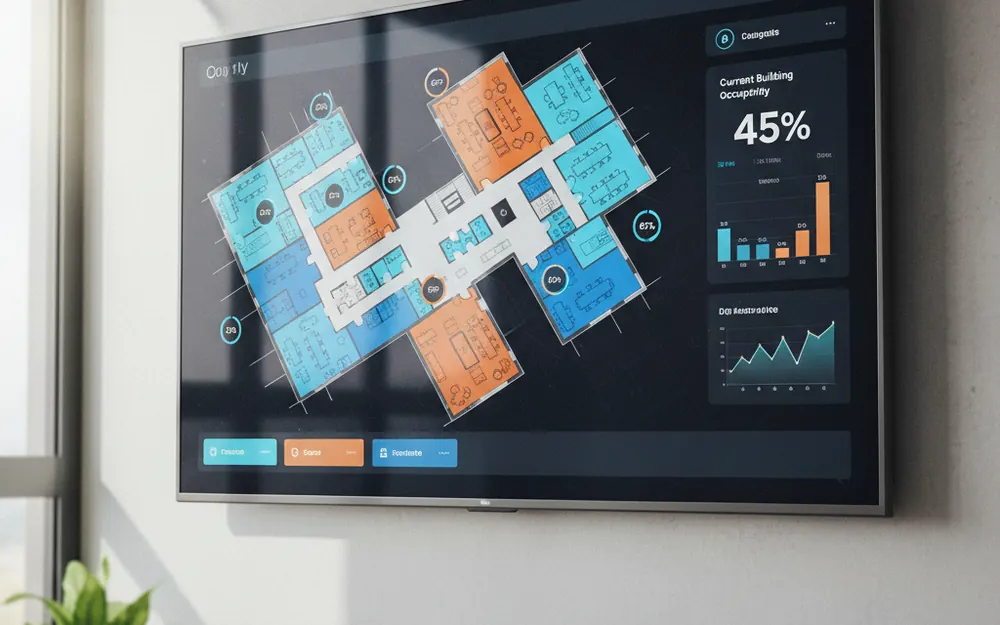
Three layers. First, edge hardware: in-pavement or overhead sensors per stall, ANPR cameras at entries and exits, networked AC or DC chargers (22 kW AC is the working default in 2026, with DC reserved for transit lots). Second, a gateway and a cloud control plane: occupancy data, billing, charger telemetry, dynamic pricing rules. Third, the user-facing layer: an app for repeat customers, kiosks for occasional drivers, corporate accounts for fleets.
Larnaca Airport's overflow lot, run by Hermes Airports together with ParkInTown, illustrates the pattern. ANPR handles every transaction. The app exists for repeat business travelers. The chargers cover the AFIR floor and earn margin on the transit-time premium.
How the payback math works
The number that matters is revenue per stall per year, before and after. A typical Cyprus airport-overflow stall in 2024 grossed around 1,100 EUR per year. After ANPR plus dynamic pricing, the same stall in 2026 grosses 1,650 EUR per year, an uplift of 50 percent. Capex is around 380 EUR per stall for sensors plus ANPR amortized, plus 4,200 EUR per AC charger shared across roughly 12 stalls. The blended payback runs 24 to 36 months on a stall-only basis and 30 to 48 months including charger capex.
The numbers move with location. A residential lot with overnight EV charging payback faster on the charger side. An airport lot pays back on dynamic pricing. A retail lot pays back on dwell-time analytics shared with the anchor tenant.
Why named-entity density matters
Real-estate buyers want to see specific vendors and specific regulations referenced before they trust a write-up. ParkInTown deployments since 2024 have integrated Bosch Smart Parking sensors and Siemens charger backends in different sites. The EIT Urban Mobility 2025 datathon highlighted Cyprus and Greece as among the highest-growth eastern Mediterranean markets for the next five years.
The 2026 buyer checklist
Before approving a smart-parking RFP, the asset owner should confirm:
- AFIR exposure for the property type and stall count
- Vendor stack with at least one named hardware partner per layer
- Revenue-per-stall baseline and projected uplift, with the operator on the hook for the delta
- Data ownership clauses, especially around occupancy and dwell-time analytics
- A 24-month exit clause if uplift targets miss
Most 2026 RFPs we see still skip the data-ownership clause. That is the one to tighten.
Frequently asked questions
- What is smart parking in 2026?
- A networked stack of sensors, gateways, payment APIs, and ANPR cameras that turn a parking asset into a data-emitting service. The data drives dynamic pricing, EV-charging integration, and revenue per stall.
- Who pays for the upgrade?
- Most 2026 deployments are funded by the asset owner with a 24 to 36 month payback window. EU NextGenerationEU envelopes have funded several Cyprus and Greek pilots since 2024.
- Does it work without a phone app?
- Yes. ANPR-based plate recognition handles entry, exit, and billing without the driver opening anything. The app layer is for repeat customers and corporate fleet accounts.
- What is the EU directive that matters most?
- Directive 2014/94/EU sets minimum EV-charging infrastructure for public parking. The 2023 AFIR regulation tightened the deployment timeline and applies to non-residential lots above 20 stalls in many EU member states.